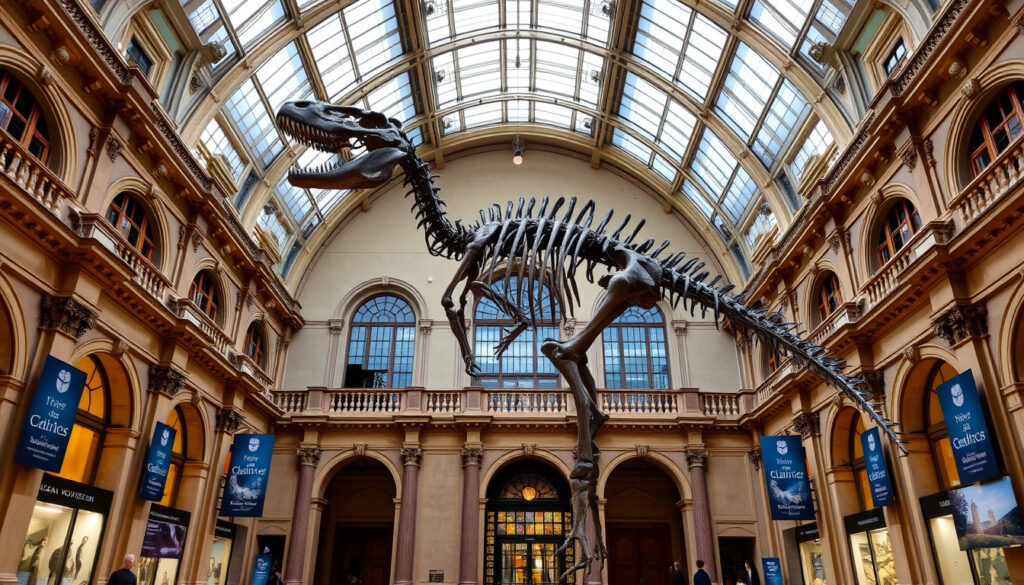
Natural History Museum, London – Exhibits, Tickets and Hours Guide
The Natural History Museum in London stands as one of the world’s preeminent institutions dedicated to the natural sciences, drawing approximately five million visitors annually to its iconic South Kensington complex. Founded in 1881, the museum houses around 80 million specimens spanning billions of years of Earth’s history, from ancient dinosaur fossils to precious minerals and the recently returned Dippy the Diplodocus cast. Its blend of world-class collections, interactive galleries, and commitment to scientific education makes it an essential destination for visitors of all ages exploring the capital.
Whether arriving by underground, seeking the best time to avoid crowds, or planning which exhibitions to prioritise during a three to four-hour visit, the museum’s sheer scale can feel overwhelming without proper preparation. This guide covers everything prospective visitors need to know, from practical logistics like opening times and ticket arrangements to the highlights that make the Natural History Museum truly unmissable.
Where is the Natural History Museum in London and How to Get There?
The Natural History Museum occupies a prominent position on Cromwell Road in the heart of London’s South Kensington cultural quarter, sharing the area with the Science Museum and the Victoria and Albert Museum. Its address is Cromwell Road, London SW7 5BD, placing it within easy reach of some of the city’s most popular attractions and surrounded by restaurants, cafes, and public facilities that cater to visitors spending extended time in the district.
Getting to the Museum by Public Transport
The most convenient route to the museum is via the London Underground to South Kensington station, which lies on the Circle, District, and Piccadilly lines. From the station, the walk to the museum’s Central Entrance takes approximately five minutes, passing through the East Gate or East Entrance options depending on queue conditions and crowd management measures in place at the time of your visit.
Planning Your Route
Visitors can download detailed maps of the South Kensington site directly from the museum’s official website, which also offers a visitor app providing real-time navigation assistance throughout the galleries. Given that the museum contains more than 80 million specimens spread across multiple floors, arriving with a clear sense of direction significantly enhances the experience. Printed maps remain available at information points throughout the building for those who prefer physical copies.
Travelling by bus offers an alternative for those unfamiliar with London’s underground network, with several routes stopping near the museum on Cromwell Road and Exhibition Road. Those driving should note that limited parking is available in the surrounding streets, and public transport remains strongly recommended given central London’s traffic conditions and congestion charges.
When to Visit to Avoid Crowds
For visitors prioritising a more relaxed experience, weekday mornings or late afternoons after 3:00 pm tend to see significantly lower footfall than peak weekend periods. Wednesdays and Thursdays consistently rank among the quietest days, while school holidays and Fridays typically bring increased visitor numbers that can impact the atmosphere in popular galleries like the Dinosaurs section.
Weekends, Fridays, and UK school holiday periods draw the highest visitor numbers to the Natural History Museum. If your schedule allows flexibility, planning your visit for midweek mornings or after 3:00 pm on quieter days can transform your experience, particularly in the most popular galleries.
Opening Times, Tickets and Is Entry Free?
One of the most appealing aspects of the Natural History Museum is its commitment to free admission for all visitors. The permanent galleries, including the world-famous dinosaur skeletons, the Hintze Hall blue whale, and the Earth Hall, remain open to everyone without charge. This accessibility policy reflects the museum’s mission to make natural history education available to the widest possible audience, funded through government support and charitable donations rather than admission fees.
Daily Opening Hours
The museum opens its doors daily from 10:00 to 17:50, with last entry permitted at 17:30. This schedule applies throughout the year with one significant exception: the museum closes completely from 24 to 26 December, reopening on 27 December. Visitors planning trips around the festive period should factor this closure into their itineraries, particularly those combining a London visit with trips to other local attractions during the Christmas season.
Booking Tickets and Timed Entry
While admission remains free, the museum strongly recommends booking timed tickets in advance through its official website, particularly during school holidays, weekends, and other periods of anticipated high demand. Timed entry tickets guarantee admission at your chosen slot and help the museum manage visitor flow to prevent overcrowding in sensitive gallery spaces. Walk-up entry remains available, but visitors arriving without pre-booked tickets may face queues, especially during busy periods when capacity restrictions occasionally apply.
Special Exhibits and Guided Tours
Beyond the free permanent collections, the museum offers paid experiences including guided tours and temporary exhibitions. The one-hour Museum Highlights Tour runs during public hours, departing from outside the Human Evolution Gallery and providing expert-led context for the institution’s most celebrated specimens. For dinosaur enthusiasts seeking an early start, the Early Dinosaur Tour begins at 9:00, requiring arrival by 8:45 to allow time for security screening before entry to the galleries.
Even during quieter periods, reserving timed entry tickets remains advisable. The process is free, and cancellation flexibility means there is little downside to securing your preferred slot in advance. Walk-in visitors should aim for early morning arrival to maximise their chances of immediate entry.
Visiting the Gardens and Tring Site
The museum’s surrounding gardens offer free access without requiring a museum ticket, opening daily from 10:00 to 17:50. This outdoor space provides a pleasant area for breaks between gallery visits or for those unable to enter the main building. Additionally, the Natural History Museum maintains a separate site in Tring, Hertfordshire, which operates on a Tuesday through Sunday schedule (including bank holidays) from 10:00 to 17:00, with last entry at 16:00. This site also closes from 24 to 26 December and houses specific collections primarily focused on zoology specimens.
Best Exhibits and Attractions at the Natural History Museum
The Natural History Museum’s collection spans billions of years of natural history, but certain exhibits have achieved iconic status that transcends the museum itself. Understanding which attractions to prioritise helps visitors make the most of their time, particularly those with limited hours available for their visit.
The Hintze Hall
The journey through the museum traditionally begins in Hintze Hall, the grand central atrium that greets visitors upon entry. Dominating the space is the suspended skeleton of a blue whale, a magnificent specimen that symbolises the museum’s commitment to showcasing the diversity of life on Earth. This central hall serves as both a navigational hub and an awe-inspiring introduction to the scale of the natural world, with additional specimen displays lining the surrounding galleries.
The Dinosaurs Gallery
Few attractions generate more excitement than the Dinosaurs Gallery, home to some of the most recognisable specimens in natural history. The centrepiece is the Tyrannosaurus rex skeleton, a predator from the Late Cretaceous period that continues to captivate visitors of all ages. Alongside this fearsome carnivore, the gallery displays the famous Diplodocus cast known as Dippy, which returned to public display in 2023 after extensive renovations to its mounting and presentation. Fern, the museum’s real Diplodocus specimen displayed outside the gallery, further enhances the prehistoric atmosphere. The suggested route of Hintze Hall to Dinosaurs to Earth Hall to the Volcanoes and Earthquakes Gallery helps visitors navigate the most popular sections efficiently.
Earth Hall and Planetary Science
For those interested in geological and planetary sciences, Earth Hall provides an immersive experience exploring the formation of our planet and the processes that continue to shape it. The Volcanoes and Earthquakes Gallery offers interactive displays demonstrating the powerful forces at work beneath Earth’s surface, making abstract scientific concepts tangible and memorable for younger visitors and adults alike. These galleries complement the biological collections by emphasising the physical context within which life evolves and adapts.
Upcoming Exhibitions
The museum continues to develop new exhibitions that bring cutting-edge research to public audiences. Jurassic Oceans: Monsters of the Deep, scheduled to open on 22 May 2026, will explore the ancient marine creatures that dominated Earth’s oceans during the Jurassic and Cretaceous periods. This exhibition promises to showcase specimens and research findings that illuminate the diversity and evolution of life beneath the waves, complementing the existing dinosaur galleries with a focus on the creatures that ruled prehistoric seas.
Major exhibitions like Jurassic Oceans operate on extended timelines and specific opening schedules. Visitors with their hearts set on particular temporary displays should verify current schedules on the official museum website before planning their trip, as dates and availability may change.
History and Background of the Natural History Museum London
The Natural History Museum’s story began long before its current South Kensington home opened to the public in 1881. Its origins trace back to the original British Museum, where natural history collections formed part of a broader ensemble of artefacts and specimens. Growing collections and distinct scientific needs prompted the separation of natural history from the main museum, leading to the construction of the magnificent Alfred Waterhouse-designed building that now welcomes millions of visitors each year. The British Museum continues to hold related collections that document the historical relationship between these institutions.
Architecture and Design
The museum building itself represents a landmark of Victorian architecture, designed by Alfred Waterhouse and constructed between 1881 and 1885. Waterhouse’s design incorporated cutting-edge features for its time, including innovative iron frameworks that allowed for large, column-free gallery spaces essential for displaying the expanding collections. The building’s terracotta facade, featuring intricate carvings of natural subjects, established a visual identity that remains instantly recognisable more than a century later.
Notable Specimens and Milestones
Throughout its history, the museum has acquired specimens that have become synonymous with natural history education. Dippy the Diplodocus, a cast replica of a Diplodocus skeleton discovered in the American West, arrived at the museum in 1905 and served as the beloved dinosaur display for over a century. While the original cast underwent conservation work and a tour of the United Kingdom, a newly conserved replica returned to public display in 2023, ensuring this iconic specimen continues to inspire new generations of visitors.
The museum’s collection has grown to encompass approximately 80 million specimens, representing the life of the planet across geological time. Recent years have seen renewed emphasis on sustainability and climate science, with programming and exhibitions increasingly focusing on the urgent challenges facing ecosystems worldwide. This commitment positions the institution not merely as a repository of the past but as an active participant in shaping understanding of our planet’s future.
Practical Tips: How Long to Spend and Family-Friendly?
Most visitors require between three and four hours to explore the main galleries comfortably, covering the primary attractions including Hintze Hall, the Dinosaurs section, and the geological displays. Those with particular interests in specific areas, such as the mineral collections or the human evolution galleries, may wish to allocate additional time, while visitors with limited schedules can prioritise the most popular sections and still enjoy a meaningful experience.
Planning for Families
The Natural History Museum ranks among London’s most family-friendly attractions, offering interactive galleries and hands-on displays that engage younger visitors beyond passive observation. The Dinosaurs Gallery naturally captures children’s imagination, but other areas like the Investigate Centre provide opportunities for supervised scientific exploration where families can examine specimens and conduct mini-experiments together. The museum meets animal welfare guidelines and maintains careful standards in its treatment of both preserved specimens and any living animals on display.
Accessibility Information
Wheelchair users can access the museum via the Exhibition Road entrance, with lifts serving all floors and accessible toilets throughout the building. For guided tours, headsets are available to ensure that hearing-impaired visitors can follow expert commentary even in crowded gallery conditions. Visitors with specific accessibility requirements should consult the official accessibility information or contact the museum directly to confirm arrangements before their visit.
Downloading the museum’s free app before arrival provides offline maps and navigation assistance that proves invaluable in a building of this size. Security checks apply at entry points, so visitors should factor this into their arrival time, particularly those with pre-booked timed entry slots that require punctual attendance.
Timeline of Key Moments
The Natural History Museum’s development spans over a century of scientific advancement, public engagement, and architectural evolution. The following milestones represent key moments in the institution’s history:
- 1881 — The Natural History Museum officially separates from the British Museum, opening its South Kensington premises designed by Alfred Waterhouse
- 1905 — Dippy the Diplodocus cast arrives, becoming the museum’s beloved dinosaur attraction for over a century
- 1980s — Major renovations transform gallery spaces, introducing more interactive and accessible displays
- 2017 — Dippy begins a UK-wide tour, departing from London to allow for conservation work and gallery redesign
- 2023 — The newly conserved Dippy cast returns to public display in refreshed surroundings
- 2026 — Jurassic Oceans: Monsters of the Deep exhibition opens, expanding the museum’s prehistoric offerings
What Is Confirmed and What Remains Unclear?
All factual information presented in this guide derives from official sources, including the Natural History Museum’s own publications and the verified visitor information available on its website as of recent updates. The following table clarifies what remains established fact versus areas where details may change:
| Established Information | Information That May Vary |
|---|---|
| Free admission to permanent galleries | Specific 2025 event schedules |
| Daily opening hours: 10:00–17:50 | Tour availability and pricing |
| Closed 24–26 December annually | Queue times and crowd levels |
| Address: Cromwell Road, London SW7 5BD | COVID-19 related restrictions |
| Nearest Tube: South Kensington | Accessibility provision updates |
| Founded 1881 | Temporary exhibition dates |
Why the Museum Matters
The Natural History Museum forms part of London’s renowned South Kensington cultural quarter, a cluster of world-class institutions that have shaped scientific education and public understanding for generations. The Science Museum and the Victoria and Albert Museum share this vibrant district, creating an unparalleled concentration of cultural and educational resources. Its significance extends beyond the specimens on display, encompassing the research conducted by museum scientists, the educational programmes that reach schools across the country, and the role the institution plays in informing public discourse on environmental challenges facing the planet.
With approximately five million visitors annually, the museum ranks among the most visited attractions in the United Kingdom, demonstrating the enduring public appetite for engagement with natural history. Its collections continue to grow through fieldwork and donations, ensuring that future generations will encounter discoveries that illuminate the story of life on Earth.
The museum holds one of the world’s most significant natural science collections, with specimens representing the full breadth of life on Earth and the geological processes that have shaped our planet over billions of years.
— Natural History Museum, London
Summary
The Natural History Museum in London offers free admission to world-class permanent galleries including dinosaur skeletons, the Hintze Hall blue whale, and geological displays spanning billions of years of Earth’s history. Located on Cromwell Road in South Kensington, the museum opens daily from 10:00 to 17:50 and is closed only from 24 to 26 December. Visitors should book timed entry tickets through the official website, particularly during school holidays and weekends when demand peaks. For those planning a London visit, the museum pairs well with other cultural experiences in the capital, offering an educational and awe-inspiring destination suitable for all ages. The upcoming Jurassic Oceans exhibition opening in May 2026 promises to expand the museum’s offerings for prehistoric marine life enthusiasts, while established favourites like Dippy continue to delight visitors who first encountered these specimens decades ago.
Frequently Asked Questions
Is the Natural History Museum in London free to enter?
Yes, admission to the permanent galleries is free for all visitors. Special exhibitions and guided tours may require payment.
How long should I plan for a visit to the Natural History Museum?
Most visitors spend three to four hours exploring the main galleries. Those wishing to see every section in detail may need longer.
Is the Natural History Museum suitable for families with young children?
The museum is highly family-friendly, with interactive galleries, hands-on activities, and the popular Dinosaurs section that particularly appeals to younger visitors.
What is the closest underground station to the Natural History Museum?
South Kensington station is the nearest, located on the Circle, District, and Piccadilly lines, approximately five minutes’ walk from the museum’s Central Entrance.
Does the Natural History Museum have wheelchair access?
Yes, wheelchair access is available via the Exhibition Road entrance, with lifts serving all floors and accessible facilities throughout the building.
When is the Jurassic Oceans exhibition opening at the Natural History Museum?
Jurassic Oceans: Monsters of the Deep is scheduled to open on 22 May 2026, exploring ancient marine creatures from the Jurassic and Cretaceous periods.
Can I visit the Natural History Museum gardens without a museum ticket?
The gardens are freely accessible without a museum ticket, opening daily from 10:00 to 17:50 alongside the main building.
What are the quietest times to visit the Natural History Museum?
Wednesdays and Thursdays, particularly mornings or after 3:00 pm, tend to be the quietest times. Weekends and school holidays see the highest visitor numbers.
More related posts
 Ryan Eggold Biography: Career, Personal Life, and Facts
 Best Basketball Hoops for Home UK: Portable, In-Ground & More Reviewed
 Suzanna Son Movies and TV Shows: Complete Filmography
 Honor Magic 6 Pro Review: Is It Worth Buying in 2024?
 Cast of the 100 – Main Actors, Characters and Seasons
 Animal Friends Pet Insurance: Reviews, Payouts & Coverage
 Sun Holiday Codes 2025: Confirmed List & How to Book £9.50 Deals
 How Old Is Kelly Brook – Age, Birthday, Family Facts