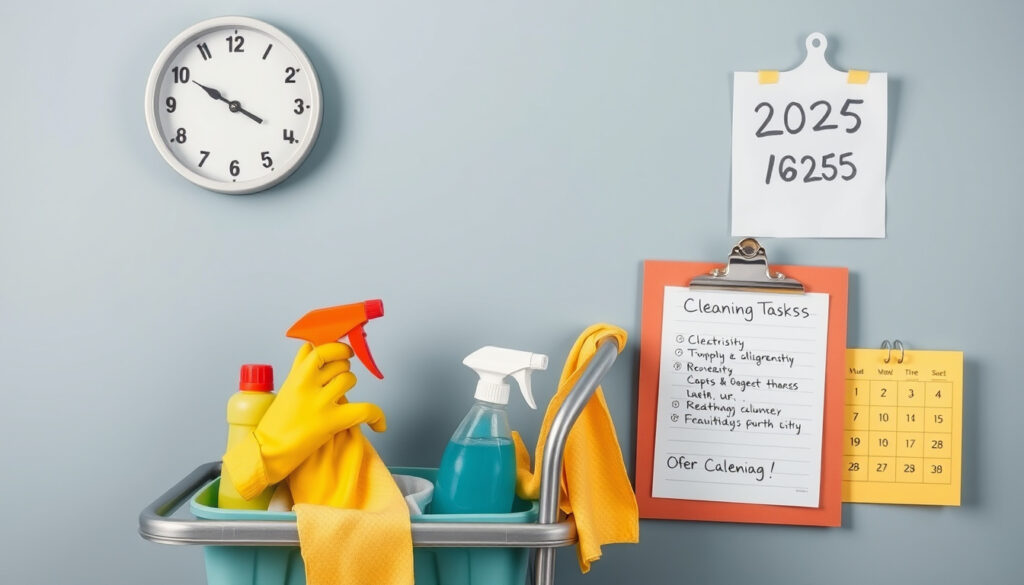
Cleaning Job Near Me: Hourly Pay & Job Type 2025 Guide
There’s something straightforward about a cleaning job: you show up, you clean, you get paid. But if you’re looking for cleaning work in Dublin, the market is more layered than a simple mop bucket.
Average hourly rate for a cleaner in Dublin: €15 (Bidvest Noonan) · Cleaner job listings on Indeed.ie in Dublin: 243 · Cleaner job listings on Jobs.ie in Dublin: 67 · Irish national minimum wage (2025): €12.70 per hour · Common shift pattern: Part-time, early morning, evening
Quick snapshot
- Minimum wage for cleaners in Ireland is €12.70 per hour (2025) – Irish government minimum wage page
- Indeed.ie lists 243 cleaner jobs in Dublin – Indeed Ireland job listings
- Jobs.ie lists 67 cleaner jobs in Dublin – Jobs.ie search results
- Bidvest Noonan advertises €15/hr for a cleaning operative (40 hrs/week) – CareerJet posting
- Exact average earnings across all cleaning niches in Ireland – CSO labour market data
- Profit margins for cleaning businesses – varies widely (CSO labour market data)
- Number of cash-in-hand cleaning jobs (unreported) (CSO labour market data)
- Current job listings as of early 2025 show steady demand – Indeed Ireland
- No significant changes in cleaning job market reported (Indeed Ireland)
- Job growth in cleaning services expected to remain steady – The Irish Times employment section
- No major shifts predicted for 2025 (The Irish Times employment section)
Here are the key numbers for cleaning jobs in Dublin.
| Fact | Value |
|---|---|
| Average hourly rate for cleaner in Dublin | €15 (Bidvest Noonan) – CareerJet |
| Cleaner jobs on Indeed.ie (Dublin) | 243 – Indeed Ireland |
| Cleaner jobs on Jobs.ie (Dublin) | 67 – Jobs.ie |
| Minimum wage Ireland 2025 | €12.70 per hour – Irish government |
| Common shift pattern | Part-time, early morning, evening – Indeed Ireland |
| Specialist cleaning hourly rate (e.g., carpet, windows) | €30–€50 – Aboutime Cleaning blog |
| No-experience cleaning jobs | Common, pay often €13–€15 per hour – multiple job listings |
How much should I pay a cleaner per hour?
Typical hourly rates for domestic cleaning
For a standard home clean in Dublin, rates usually fall between €13 and €18 per hour. A cleaner working through a local agency might charge closer to €15–€18 while independent cleaners often set their own price. According to Bidvest Noonan (a leading facilities management company), their cleaning operatives start at €15 per hour for a 40-hour week.
“€15 per hour for a 40-hour week cleaning operative position.”
Bidvest Noonan job advert, 2025
Commercial cleaner pay in Dublin
Commercial cleaning roles — think offices, hospitals, or retail spaces — tend to pay a little more, often €14–€20 per hour. Jobs.ie listings show many commercial cleaning jobs hovering around €13–€16. The Irish government sets the national minimum wage at €12.70 per hour (2025), so anything above that is the baseline for cleaners.
Factors affecting cleaner costs
Several elements push rates up or down: experience level, whether the job is one-off or regular, and location within Dublin. City-centre jobs tend to pay a premium compared to suburban work. The Irish Independent has noted that demand for experienced cleaners in commercial settings is rising, which keeps rates competitive.
The result: employers can expect to pay €15+ for experienced staff, while job seekers can target above minimum wage.
Is 2 hours enough to clean a house?
What can be cleaned in 2 hours
A two-hour clean typically covers the surface work: wiping kitchen counters, vacuuming main living areas, mopping floors, and cleaning a bathroom. According to industry cleaning time guides, a two-person team can handle a two-bedroom house in that window. Solo cleaner? Expect to focus on the busiest rooms.
3-hour cleaning session scope
With three hours, a cleaner can tackle deeper tasks: oven cleaning, inside windows, baseboards, and a thorough bathroom scrub. Aboutime Cleaning blog suggests that three hours is the sweet spot for a standard three-bedroom house if the cleaner works efficiently.
Time needed for bathroom cleaning
A single bathroom takes 30–60 minutes depending on the level of grime. An ensuite adds around 20 minutes. The Janitorial Store’s guide breaks it down: toilet, sink, shower, and floor — each zone about 10-15 minutes.
The pattern: two hours works for maintenance cleaning; three hours allows for depth. If you’re hiring a cleaner, expect to pay for a minimum of two hours — many agencies enforce this.
What type of cleaning makes the most money?
Commercial vs residential cleaning profitability
Commercial cleaning generally pays a higher hourly rate — often €14–€20 compared to €13–€18 for residential. Jobs.ie data shows commercial listings averaging €15.50, while residential roles average €14. But commercial work often requires more consistent hours and may come with a stable contract.
Specialist cleaning earnings
Carpet cleaning, window cleaning, and deep-cleaning services can command €30–€50 per hour, according to Aboutime Cleaning (a specialist cleaner in Ireland). The catch: you need equipment and certification. A carpet cleaning machine alone costs several hundred euros, but the markup on each job is much higher than general cleaning.
Cleaning business profit margins
Running a cleaning business involves overheads: equipment, transport, insurance, and marketing. According to Revenue’s tax guidance for self-employed, typical net margins range from 15% to 30%. Specialist niches (like post-construction cleaning) can push margins higher.
General cleaning offers steady work at moderate pay. Specialist cleaning offers higher per-hour earnings but requires upfront investment in gear and training. For job seekers, commercial roles give more predictable hours; for entrepreneurs, a niche service can double hourly income.
Specialist cleaning offers a path to higher earnings for those willing to invest in training.
What is the 20 minute rule in cleaning?
How the 20-minute rule works
The 20-minute rule is a productivity technique: set a timer for 20 minutes, clean one area intensely, then take a break. The Janitorial Store’s time management guides recommend it to avoid burnout during long jobs. It’s especially useful for deep cleaning a room that feels overwhelming.
Applying the rule to cleaning routines
Professional cleaners often use this method for large commercial spaces. For example, spend 20 minutes on a set of offices, move to the next zone, and repeat. It keeps momentum up and ensures all areas get equal attention.
The implication: the 20-minute rule isn’t about cleaning speed — it’s about focus. For job seekers, adopting this technique can help manage large cleaning tasks more efficiently.
How to find cleaning jobs near me?
Top job boards for cleaning jobs in Dublin and Cork
Your first stop should be the big aggregators. Indeed Ireland currently lists 243 cleaner jobs in Dublin. Jobs.ie has 67. Both let you filter by type (domestic, commercial, part-time). For Cork, similar searches return around 150 on Indeed and 40 on Jobs.ie.
No-experience cleaning job opportunities
Many cleaning jobs explicitly state “no experience needed.” Indeed’s results show roles paying up to €15.25 per hour for entry-level positions. A Citizens Information guide notes that cleaning is one of the few fields where employers often train on the job.
Part-time and early morning shifts
Part-time cleaning work is the norm. Listings on Indeed Ireland frequently mention “early morning shift, 6am–10am” or “evening 5pm–9pm”. This makes cleaning a popular second job or student gig.
“Immediate start, no experience needed, working 37.5 hours per week, up to €15.25 per hour.”
Indeed Ireland job listing, 2025
Cash-in-hand cleaning jobs exist but carry legal risks for both employer and employee. Under Irish law, all cleaning work must be declared for tax and PRSI. Revenue’s guide explains the obligations for self-employed cleaners.
Always ensure any cleaning work is declared for tax compliance.
Comparison: cleaning job types in Dublin
Three main categories, one key question: what do you want from a cleaning job?
| Factor | Domestic cleaning | Commercial cleaning | Specialist cleaning |
|---|---|---|---|
| Typical hourly pay | €13–€18 | €14–€20 | €30–€50 |
| Hours | Flexible, often part-time | Early morning/evening, steady | Varies, often one-off jobs |
| Experience needed | Minimal | Often minimal, some require safe pass | Specific training/equipment |
| Job security | Lower – gig-like | Higher – contracts | Moderate – depends on demand |
| Earning potential (monthly, part-time) | €800–€1,100 (20 hrs/week) | €1,100–€1,600 (20 hrs/week) | €1,500–€2,500 (20 hrs/week) |
| Overheads for self-employed | Low (mop/bucket) | Low–medium (uniform, travel) | High (equipment, certification) |
Upsides
- Flexible hours – ideal for students or second jobs
- No formal qualifications needed – many jobs train on the spot
- Demand is steady – cleaning is always needed
- Opportunity to move into specialist roles (higher pay)
Downsides
- Pay can be low (minimum wage for some roles)
- Physical work – can be tiring and repetitive
- Part-time/irregular hours – not always reliable income
- Cash-in-hand jobs offer no employment protections
Choosing between domestic, commercial, and specialist roles depends on your priorities for flexibility vs. income.
How to find cleaning jobs near me: step-by-step
- Search the big boards – Check Indeed.ie (243 Dublin listings) and Jobs.ie (67 Dublin listings). Filter by “no experience” and “part-time” to narrow.
- Set up alerts – Both sites allow email alerts for “cleaning jobs Dublin” so new postings hit your inbox.
- Check company websites directly – Firms like Bidvest Noonan post on their own career pages. Also try hospital and hotel cleaning pages.
- Use social media & community groups – Facebook groups like “Cleaning Jobs Ireland” often have direct posts from employers.
- Prepare a simple CV – Even without experience, list availability, reliability, and any relevant skills (e.g., driving licence, ability to lift).
- Apply and follow up – Many cleaning jobs fill quickly; call or email a day after applying.
Cleaning jobs: what’s confirmed and what’s unclear
- Confirmed: Minimum wage for cleaners in Ireland is €12.70 per hour (2025) – Irish government
- Confirmed: Indeed.ie lists 243 cleaner jobs in Dublin – Indeed Ireland
- Confirmed: Jobs.ie lists 67 cleaner jobs in Dublin – Jobs.ie
- Confirmed: Bidvest Noonan advertises €15/hr for cleaning operative (40 hrs/week) – CareerJet
- Unclear: Exact average earnings across all cleaning niches in Ireland – data not available from a single source
- Unclear: Profit margins for cleaning businesses – varies widely, no official figure
- Unclear: Number of cash-in-hand cleaning jobs – unreported, likely significant
For anyone looking for work, the cleaned market in Dublin offers a low-barrier entry with room to grow. The trade-off is between flexibility (part-time domestic) and stability (commercial contracts). For those willing to invest in specialist equipment, the earning ceiling rises fast.
ie.indeed.com, indeed.com, ohiocleaningexperts.com, glassdoor.com, care.com, sheetz.com
For those considering professional help, understanding cleaning service prices in Ireland can help you budget for regular cleaning.
Frequently asked questions
Do I need experience to get a cleaning job in Ireland?
No. Many cleaning jobs explicitly state “no experience needed” and provide on-the-job training. Indeed Ireland lists dozens of entry-level cleaning roles paying up to €15.25 per hour.
How many hours per week do cleaning jobs typically offer?
Most cleaning jobs are part-time, offering 10–30 hours per week. Full-time 40-hour roles exist but are rarer. Early morning and evening shifts are common for commercial work.
Can I work as a cleaner without speaking English?
Some domestic cleaning jobs where you work alone may not require fluent English, but most employers prefer at least basic communication. Commercial roles usually require conversational English for safety and instructions.
Are cleaning jobs in Ireland paid weekly or monthly?
Weekly pay is common for agency and contract cleaning jobs. Independent or self-employed cleaners often invoice monthly. Always confirm before starting.
What is the difference between domestic and commercial cleaning?
Domestic cleaning is in private homes, often flexible hours. Commercial cleaning covers offices, shops, and institutions, with more structured shifts and often slightly higher pay.
Is it legal to pay cash in hand for cleaning work?
Cash payments are legal only if tax and PRSI are declared. Undeclared cash work is illegal for both the employer and the cleaner. Revenue Ireland provides guidance on proper reporting.
How often should I expect to work as a part-time cleaner?
Most part-time cleaners work 2–5 days per week, with shifts ranging from 2–6 hours. Many jobs offer a set schedule (e.g., Mon–Fri mornings).
More related posts
 Cast of The Secret Lives of Mormon Wives: Full List & Net Worth
 Hi Ho Silver Lining – Jeff Beck’s Hit He Never Liked
 DWP Bank Account Checks Start in 2026: Timeline and Rules
 Max Parker: Emmerdale star, husband Kris Mochrie & career
 Charlotte Jordan Quits The Archers After Just One Month
 Sky Customer Services Phone Number: UK & Ireland Guide
 Vincent Cassel: Relationships, Age Gap, Children, and Career
 Honor Magic 6 Pro Review: Is It Worth Buying in 2024?