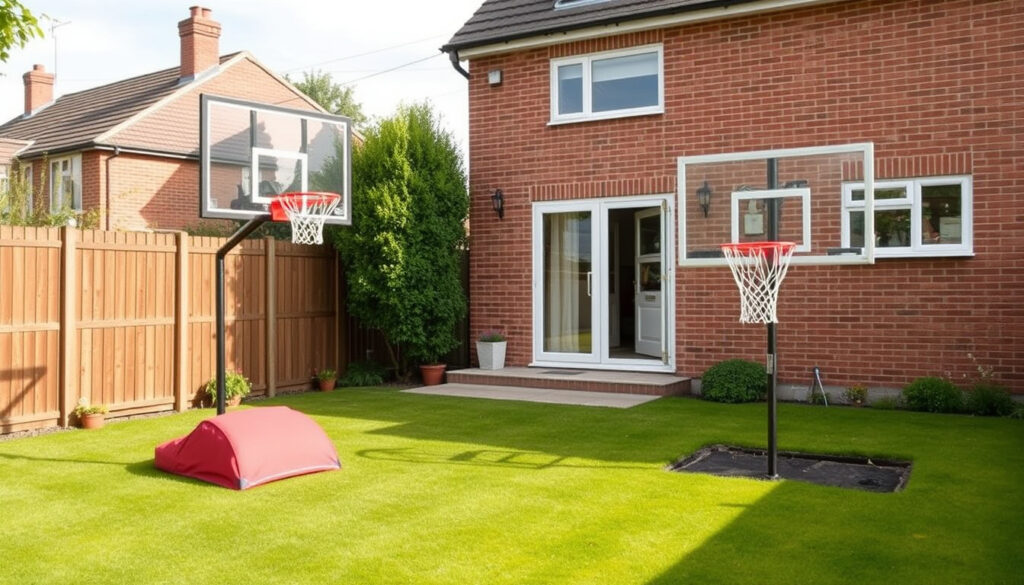
Best Basketball Hoops for Home UK: Portable, In-Ground & More Reviewed
Few home sports spark as much family fun as a basketball hoop in the garden. Portable models have become the go‑to choice for UK households because they don’t need permanent fixing and can adjust from 7.5 feet for young kids up to the regulation 10 feet.
Average price range for home basketball hoops (UK): £200 – £500 ·
Common backboard sizes: 44, 54, 60, 72 inches ·
Weight of filled portable base: 100 – 200 lbs (45 – 90 kg) ·
Regulation hoop height: 10 feet (3.05 meters) ·
Number of UK retailers surveyed: 5 (Argos, Smyths, Net World Sports, Decathlon, Sports Direct)
Quick snapshot
- Best for flexible placement (Net World Sports specialist equipment retailer)
- Base filled with sand or water (mybest UK product review aggregator)
- Typically 44–60 inch backboard (mybest UK)
- Price range £80–£400 (Decathlon UK sporting goods chain)
- Permanent installation (Evening Standard UK newspaper)
- More stable and durable (Net World Sports)
- Often 60–72 inch backboard (Evening Standard)
- Price range £300–£1000+ (Net World Sports specialist equipment retailer)
- Saves space (Evening Standard)
- Requires solid wall fixing (GardenToolbox sports review site)
- Backboard size limited (Evening Standard)
- Price range £50–£200 (Evening Standard UK newspaper)
- Adjustable height from 6.5ft (GardenToolbox)
- Lightweight bases (UK Government)
- Smaller backboards (36–44 inch) (GardenToolbox)
- Price range £30–£100 (UK Government Toys Safety Regulations 2011)
Five key specs summarise the landscape for UK buyers:
| Specification | Value |
|---|---|
| Regulation rim height | 10 feet (3.05 m) – official FIBA/NCAA/NBA standard |
| Most common portable backboard size in UK | 44 inches (for casual home use) |
| Average weight of a filled portable base (sand) | approx. 150 lbs (68 kg) |
| Top UK retailer for basketball hoops | Argos (30+ models listed) |
| Typical warranty for mid-range hoops | 1–2 years on frame, 90 days on components |
How to choose a portable basketball hoop?
What size basketball hoop for home?
Portable hoops sold in the UK typically have backboards between 60 cm and 115 cm wide (roughly 24 to 45 inches), according to product review aggregator mybest UK. A 60‑inch (152 cm) board is at the upper end of portable size; a full regulation 72‑inch (187 cm) board is rare on a portable frame. Height‑adjustable models can drop as low as 7.5 feet for children and extend to the 10‑foot standard, which the specialist sports retailer Net World Sports notes is essential for older teenagers and adults.
A family that buys a hoop only adjustable to 8 feet will outgrow it within two years. Choose a model that reaches 10 feet from day one.
What brand is best for portable basketball hoops?
No single brand dominates the UK market, but Decathlon UK (sporting goods chain) offers an entry‑level portable hoop at £54.99 and a B900 NBA‑Approved model at £999.99. Net World Sports (specialist equipment retailer) carries a range of freestanding hoops with polyethylene backboards and powder‑coated steel rims. Evening Standard (UK newspaper) has reviewed several models and notes that wall‑mounted hoops suit smaller gardens, while portable stands offer flexibility.
Which portable basketball hoop is the easiest to move?
Look for models with built‑in wheels and a handle. The base should be relatively light when empty – ideally under 20 kg – because it will be filled with sand or water after positioning. Net World Sports recommends checking the base capacity: a 65‑litre base is manageable for one person to wheel around, whereas 115‑litre bases are more stable but harder to shift once filled.
The pattern: portability always trades off against stability. Lighter bases are easier to move but more likely to tip during aggressive play.
What is the best basketball hoop for home use?
What are the best basketball hoops in the UK?
UK retailers such as Decathlon UK and Net World Sports consistently list adjustable portable hoops with 44‑ to 60‑inch backboards as the best‑sellers. The Evening Standard’s review team noted that freestanding models from brands like MegaSlam and Sienna offer the best compromise between cost and durability for a typical UK garden. For children under 14, the UK Government’s Toys (Safety) Regulations 2011 apply – hoops intended for that age group must meet specific safety requirements, including stability and lead‑content limits.
What brand is best for portable basketball hoops?
Because user reviews vary widely – some praise MegaSlam’s powder‑coated rims, while others report rust within a year – GardenToolbox (gardening and sports review site) advises prioritising UV‑protected polyethylene backboards and galvanised steel poles. The long‑term durability of any brand depends more on the materials used than on the logo. Buying from a retailer with a clear returns policy, such as Argos or Smyths, adds peace of mind.
Without independent durability testing, the “best” brand is the one whose parts match your climate and usage. For coastal areas, rust‑proofing is critical; for heavy use, a thicker pole (3 mm vs 2 mm) makes a real difference.
Is it better to fill a portable basketball hoop with water or sand?
Is base gel better than sand?
The answer depends on your priorities. Evening Standard reports that sand is denser than water and shifts less during play, making it the more stable filler. Water is cheaper and easier to empty, but it freezes and expands in winter, potentially cracking the base. Base gel (a polymer that thickens when wet) offers the stability of sand without the freezing risk, but it costs roughly three times as much per litre as sand. mybest UK notes that typical portable bases hold 65 to 115 litres, so the cost difference is significant: £15–£25 for sand vs £45–£80 for gel.
What do you put in the bottom of a basketball hoop?
Most portable hoops come empty and require the buyer to fill the base after assembly. Net World Sports recommends dry play sand (available at builders’ merchants) for maximum stability. If you plan to move the hoop regularly, water is more convenient because it can be drained with a hose. Avoid mixing the two – sand will clump and water will become a mud risk.
The trade‑off: water is cheaper and portable, sand is stable but heavy, gel is premium but costly. Your choice should match how often the hoop will be moved and whether it stays outside all year.
Should I get a 60 or 72 basketball hoop?
What size basketball hoop for home?
Most portable hoops have backboards between 60 cm and 115 cm wide (24–45 inches), as confirmed by mybest UK. A 60‑inch (152 cm) backboard is uncommon on portables and typically found on mid‑range in‑ground models. A 72‑inch (183 cm) backboard – the regulation size used in professional basketball – is almost exclusively in‑ground or wall‑mounted. For a standard UK driveway, a 44‑ to 54‑inch backboard is usually sufficient for casual play. Evening Standard advises measuring your available space: allow at least 3 metres behind the hoop for a proper shooting arc, and ensure the backboard won’t overhang into a neighbour’s property.
Two sizes, one pattern:
| Backboard Width | Typical Type | Space Needed (depth) | Suitable For |
|---|---|---|---|
| 44–54 inches (112–137 cm) | Portable | 4.5 m | Kids, casual play |
| 60 inches (152 cm) | Portable / In‑ground | 5.5 m | Teens, intermediate |
| 72 inches (183 cm) | In‑ground / Wall‑mounted | 6 m+ | Adults, advanced |
The implication: unless you have a dedicated court‑size driveway, a 72‑inch hoop is overkill for most UK homes. A 60‑inch board provides an excellent game‑like feel without dominating the garden.
How much should a basketball hoop cost?
Why are basketball hoops so expensive?
Prices at Decathlon UK span from £54.99 for a basic portable hoop to £999.99 for the NBA‑approved B900. The gap reflects three cost drivers: backboard material (polyethylene vs polycarbonate vs tempered glass), pole thickness (2‑mm steel vs 3‑mm), and base weight (65‑litre vs 115‑litre capacity). GardenToolbox adds that nylon nets and powder‑coated rims are hallmarks of mid‑range models, while cheap hoops often cut corners with thin rims and standard paint that rusts quickly. The result: a £150 hoop may need replacing after two winters, whereas a £400 hoop can last a decade with basic care.
A second price comparison across six common features:
| Feature | Budget (£80–£150) | Mid‑range (£200–£400) | Premium (£500+) |
|---|---|---|---|
| Backboard material | Polyethylene | Polycarbonate | Tempered glass |
| Pole thickness | 2 mm | 2.5 mm | 3 mm |
| Base capacity | 65 L | 85 L | 115 L |
| Adjustable height | 7.5 – 10 ft | 7.5 – 10 ft | 7.5 – 10 ft |
| Nylon net | Standard | Standard | UV‑resistant |
| Warranty | 1 year | 2 years | 3 years |
Beware of ultra‑cheap hoops (£30–£60) sold without a base or with a base that cannot hold enough weight for safe play. The UK Government warns that unstable hoops can tip over and cause injury, especially on sloped driveways.
The pattern: you pay for stability and longevity. A well‑built portable hoop at £300 is usually the sweet spot for UK families who want real durability without the installation hassle of an in‑ground model.
Steps to set up a portable basketball hoop
Four steps, one goal: a safe, stable hoop that lasts.
- Assemble the base and pole according to the manual. Net World Sports advises laying all parts out first and tightening bolts fully before filling the base.
- Fill the base with your chosen filler. For sand, use a funnel and pour slowly to avoid spillage. For water, fill to the manufacturer’s line (Evening Standard recommends leaving a 2‑cm air gap to allow for thermal expansion).
- Attach the backboard and rim. Use the supplied hardware and check that the rim is level using a spirit level. Tighten with a wrench, not just hand‑tight (GardenToolbox).
- Adjust height and test stability. Set the hoop to 8 feet for initial practice, then raise it to 10 feet for full games. Push the rim firmly sideways – if the base rocks, add more filler or reposition the hoop on flat ground.
The catch: skipping step 4 is the most common mistake. A hoop that feels stable when empty can tip once a player dunks or hangs on the rim. Always test with your full body weight before letting children play unsupervised.
What we know and what remains unclear
Confirmed facts
- Regulation basketball hoop height is 10 feet (Net World Sports)
- Sand‑filled bases are more stable than water‑filled (Evening Standard)
- Adjustable hoops allow height from 7.5 to 10 feet for growing children (Net World Sports)
- Portable hoops used by children under 14 may fall under the UK Toys (Safety) Regulations 2011 (UK Government)
What’s unclear
- Which specific brand offers the best long‑term durability – user reviews are inconsistent
- Optimal base filler for extremely cold climates – water freezing vs sand compacting both have risks
Expert perspectives and user experiences
“Portable hoops can be used indoors or outdoors because they can be moved easily.”
— Net World Sports (specialist equipment retailer)
“Sand is often considered denser than water and is less affected by freezing in cold weather.”
— Evening Standard (UK newspaper)
“High‑quality nylon nets and powder‑coated steel rims are recommended features for outdoor hoops.”
— GardenToolbox (sports equipment review site)
Summary
The UK market for portable basketball hoops offers genuine value, but the choice between water and sand, 44 and 72 inches, or £80 and £400 is a trade‑off every family must make for themselves. For the typical British garden used by children and teenagers, a 54‑inch portable hoop with a sand‑filled base and a 3‑year warranty strikes the best balance of cost, stability, and longevity. For households in northern UK regions where winter temperatures regularly drop below freezing, the extra spend on base gel is not a luxury – it’s the difference between a hoop that lasts a decade and one that cracks in its first winter.
Related reading: Carrera Vengeance E Bike Review: Specs, Range & Value · One Rep Max Calculator: Estimate 1RM for Bench, Squat, Deadlift
testix.co.uk, tradingdepot.co.uk, wowcher.co.uk, boundbyflame.com, oncourt.online, hoopsfix.com
Frequently asked questions
Can I use a basketball hoop on a sloped driveway?
It is not recommended. A sloped surface reduces stability and makes the backboard appear tilted. The UK Government advises that portable hoops should only be used on level ground. If your driveway slopes, consider an adjustable‑leg model or a wall‑mounted hoop.
What type of backboard material is best for outdoor use?
Polyethylene is the most common for portable hoops and is highly durable when UV‑protected. GardenToolbox recommends looking for “UV‑stabilised polyethylene” on the spec sheet. Tempered glass gives the best rebound but is heavy and usually limited to in‑ground models.
How do I maintain a portable basketball hoop?
Tighten bolts every month, check the base filler level, and store the net indoors during winter. Wash the backboard with mild soap and water to remove algae. Net World Sports suggests lubricating the height‑adjustment mechanism twice a year with silicone spray.
Are in‑ground basketball hoops worth the extra cost?
If you have a dedicated space and expect heavy use from teenagers or adults, yes. In‑ground hoops are more stable and allow larger backboards (60–72 inches). However, they cost £300–£1,000 plus installation, and removing them is messy. Evening Standard notes that portable hoops suffice for most families.
What is the best basketball hoop for a 10‑year‑old?
A 44‑inch portable hoop with height adjustment from 7.5 to 10 feet. Net World Sports recommends a sand‑filled base for stability and a nylon net for safety. Ensure the hoop meets the UK Toys (Safety) Regulations if the child is under 14.
Do portable basketball hoops come with warranties?
Yes, but terms vary widely. Budget models (under £150) typically offer 1 year, mid‑range models 2 years, and premium hoops up to 3 years. Always check the warranty covers the frame and base, not just the backboard. mybest UK advises reading the fine print on “90‑day component” coverage.
How long does it take to assemble a basketball hoop?
Most portable hoops take 30–60 minutes with two adults. Assembly usually requires a Phillips screwdriver and a wrench. Net World Sports recommends allowing an extra 30 minutes for filling the base with sand.
More related posts
 Weight Loss Injections Ozempic – Effectiveness, Safety and Access Guide
 Kevin O’Leary: Net Worth, Mr. Wonderful, and Biography
 Ryan Eggold Biography: Career, Personal Life, and Facts
 Black Shoes for Women: Formal, Casual, Heels Ireland
 Cast of the 100 – Main Actors, Characters and Seasons
 Cast of Doctor Who: All Actors & Companions in Order
 How to Tell If Eggs Are Bad – Float Smell and Visual Tests
 Mr. Krabs: Facts, History, and FAQ About the Krusty Krab Owner