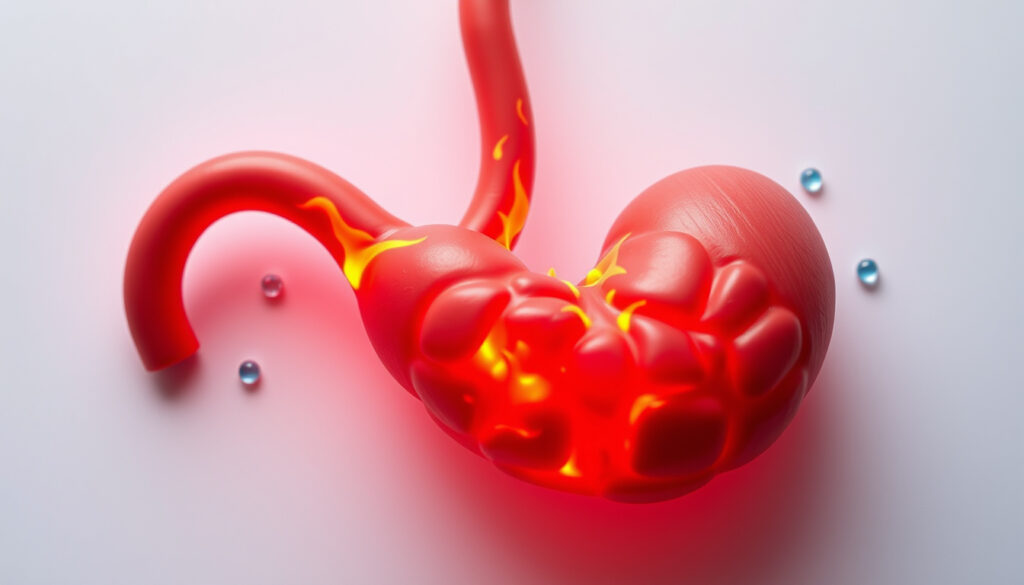
Burning Sensation in Stomach: Causes, Relief, When to Worry
Few sensations are as unsettling as a burning feeling in your stomach — that persistent, fire-like discomfort that often shows up after a meal or catches you off guard at night. Most causes are manageable with the right approach. This article breaks down what triggers that burning sensation, what UK health authorities recommend for quick relief, and exactly when you should see a doctor.
Most Common Cause: Indigestion · Typical Location: Upper abdomen · Often Worse: After eating or at night · Key Sources: NHS, HSE
Quick snapshot
- Indigestion causes burning around stomach after eating (HSE (Ireland’s Health Service))
- Stomach ulcer pain often burns worse at night (NHS)
- Exact tumor warning signs without medical evaluation
- Individual food reactions vary person to person
- Burning that persists beyond 2 weeks warrants a GP visit
- Work through causes, relief methods, and red flags below
Here’s what medical guidance from UK and international health authorities confirms about the key patterns doctors look for.
| Label | Value |
|---|---|
| Primary Symptom Location | Upper stomach |
| Leading Cause | Indigestion or dyspepsia |
| Ulcer Pain Pattern | Worse at night (NHS) |
| Common Trigger | After eating (HSE.ie) |
| Bed Elevation Range | 10 to 20 centimeters (NHS) |
| Medical Term | Dyspepsia |
Why would my stomach feel like it’s burning?
That burning sensation isn’t random — it almost always points to something your digestive system is reacting to. Indigestion, also called dyspepsia, is the most common culprit and refers to discomfort or a burning feeling around the stomach after eating (HSE (Ireland’s Health Service Executive)). Beyond that, several other conditions can produce the same effect.
Common causes like indigestion
Indigestion covers a broad range of symptoms, including that characteristic burning in your upper abdomen. It often flares up when you eat too quickly, consume fatty or spicy foods, or deal with stress around mealtimes. The condition is extraordinarily common — health authorities in both the UK and Ireland list it as one of the top reasons people experience stomach discomfort.
Acid-related issues
Acid reflux and gastritis both involve stomach acid irritating the lining of your digestive tract. When acid escapes upward into the esophagus, it creates that fiery feeling many people describe as heartburn. Gastritis, which is inflammation of the stomach lining, produces a similar burning sensation and can be triggered by medications, bacterial infections, or chronic use of certain pain relievers.
Specific cases: upper stomach, pregnancy
Burning in the upper stomach often centres around the epigastric region, just below the ribcage. For pregnant women, hormonal changes slow digestion and relax the valve between the stomach and esophagus, making reflux and burning far more common — especially in the third trimester. These cases typically resolve after delivery but can be managed safely with dietary adjustments and approved antacids.
How do I stop my stomach from burning?
Quick relief and longer-term comfort both matter when you’re dealing with a burning stomach. Here’s how to tackle it from multiple angles, starting with what you can do right now.
Immediate steps
Antacids work fast because they neutralize stomach acid on contact. Over-the-counter options containing calcium carbonate or magnesium hydroxide can ease burning within minutes. Another surprisingly effective trick: chew gum. Salivation triggered by chewing neutralizes acid in your esophagus and helps wash it back down into the stomach (Harvard Health (Harvard Medical School’s patient education platform)). Avoid peppermint-flavoured gum, though — peppermint can actually trigger heartburn in some people.
Home remedies
Several kitchen staples have solid evidence behind them as stomach soothers. Ginger (Zingiber officinale) contains gingerol, a compound with natural anti-inflammatory properties that promotes digestion and reduces acid production (Pace Hospital (Indian gastroenterology centre)). Peppermint and chamomile tea relax the muscles of your digestive tract, reducing cramping and intestinal spasms (Baptist Health (US health system)).
- Ginger tea: steep fresh ginger in hot water for 5-10 minutes
- Chamomile tea: steep for at least 10 minutes to draw out anti-inflammatory compounds (Healthline (health information publisher))
- Baking soda solution: about half a teaspoon in four ounces of warm water (Baptist Health)
- Aloe vera juice: approximately 1/4 cup before meals (Pace Hospital)
- Heat application: a heating pad on your abdomen relaxes muscles and eases cramping (Manhattan Gastroenterology (US gastroenterology practice))
Lifestyle changes
Eating smaller, more frequent meals reduces pressure on your stomach compared to large portions. Stick to easily digestible foods like plain rice, bananas, oats, and steamed vegetables — bananas are naturally alkaline and can help neutralize acid while stimulating protective mucus production (Pace Hospital).
That burning sensation is your stomach lining signalling distress. For UK patients, NHS guidance on raising your bed by 10 to 20 centimetres — so your chest sits above your waist — directly addresses nighttime reflux without medication.
Some medications actively worsen acid reflux. Tricyclic antidepressants like amitriptyline loosen your lower esophageal sphincter, and tetracyclines like doxycycline can cause esophageal inflammation (Harvard Health). If you’re on either type, speak with your GP before adding acid-reducing remedies.
When should I worry about a burning sensation?
Most burning stomach episodes are benign and settle within hours or a couple of days. But certain patterns warrant professional attention.
Warning signs
Pay attention if the burning worsens specifically at night, persists for more than two weeks, or comes alongside unintended weight loss, difficulty swallowing, or vomiting. Stomach ulcer pain typically centres in the upper abdomen, may feel distinctly like burning, and is often markedly worse at night when your stomach is empty (NHS). That’s a signal worth acting on.
When to see a doctor
Book a GP appointment if symptoms interrupt your sleep most nights, if over-the-counter antacids stop working, or if you notice blood in your vomit or stool. Those aren’t symptoms to monitor passively — they indicate something that needs medical assessment.
Tumor indicators
Early-stage stomach tumours can occasionally present as persistent upper abdominal burning, but this is relatively uncommon and usually accompanied by other red flags like significant weight loss, persistent nausea, or appetite loss. The burning alone — without other symptoms — is far more likely to stem from indigestion or reflux. Still, any burning that lasts beyond three weeks despite lifestyle adjustments deserves a GP evaluation.
Is a burning stomach serious?
In the vast majority of cases, no — but context matters enormously. Whether a burning stomach is serious depends largely on what’s causing it, how long it’s lasted, and what other symptoms accompany it.
Common vs serious
The most common cause — indigestion — is exactly that: common. It’s a widespread, manageable condition and rarely signals anything dangerous. However, recurrent or severe burning can indicate a stomach ulcer, which needs treatment to prevent complications like bleeding or perforation. The key difference is that ulcer pain tends to be more localized, more intense, and notably worse when your stomach is empty or at night.
Factors like location and duration
Burning confined to the upper abdomen that arrives after meals and settles within an hour or two almost always points to food-related causes. Burning that radiates upward into your chest, persists for hours, or wakes you at night suggests reflux or ulcer involvement. Duration matters too — a single episode after a heavy meal is nothing to worry about; daily burning across two weeks is a different story.
“Stomach ulcer pain is usually in the upper part of your tummy, may feel like burning, and is often worse at night.”
— NHS (UK National Health Service guidance)
What to drink to soothe a burning stomach?
What you drink matters as much as what you eat when managing a burning stomach. Some beverages actively help; others make things worse.
Quick drink options
- Water: sips of plain water help dilute stomach acid and flush your digestive tract
- Ginger tea: anti-inflammatory and directly aids digestion
- Chamomile tea: reduces stomach acid and eases gut discomfort through anti-inflammatory compounds (Baptist Health)
- Fennel seed (saunf) tea: aids digestion and reduces bloating (Pace Hospital)
- Aloe vera juice: approximately 1/4 cup before meals soothes the digestive tract and controls acid production (Pace Hospital)
What to avoid
Alcohol, coffee, citrus juices, and anything carbonated can all aggravate your stomach lining and stimulate additional acid production (Sydney Gut Clinic (Australian gastroenterology centre)). Onions and fried foods similarly trigger acid production in susceptible individuals. Temporary elimination of these items while your symptoms are active can make a measurable difference.
UK culture runs heavily on tea, coffee, and pub drinks — all of which can aggravate burning stomach symptoms. Swapping your morning coffee for ginger tea and your evening pint for chamomile isn’t a permanent sentence, but it’s a targeted intervention that gives your stomach lining a real chance to settle.
Step-by-step guide: Stopping stomach burning immediately
When that burning flares up and you need relief now, work through these steps in order.
- Sip warm water. Start with small sips to dilute and neutralize stomach acid without overfilling your stomach.
- Chew sugar-free gum for 15-20 minutes. This triggers saliva production that naturally neutralizes acid in your esophagus (Harvard Health). Avoid peppermint varieties.
- Mix half a teaspoon of baking soda in four ounces of warm water. The sodium bicarbonate acts as a fast-acting antacid. Do not exceed this dose and avoid if you have high blood pressure (Baptist Health).
- Apply a heating pad to your upper abdomen. Heat relaxes the digestive muscles and can ease cramping within 15-20 minutes (Manhattan Gastroenterology).
- Prop yourself upright. If you’re in bed, raise the head of your bed by 10 to 20 centimetres — or use extra pillows — so gravity keeps acid in your stomach where it belongs (NHS).
- Drink chamomile or ginger tea. Steep chamomile for at least 10 minutes to extract maximum anti-inflammatory benefit, or sip warm ginger tea. Both relax digestive muscles and reduce cramping (Baptist Health).
- Skip trigger foods. If you know what triggered this episode — a heavy meal, alcohol, spicy food — avoid those triggers for the rest of the day and ideally the next day.
What the research confirms — and what it doesn’t
Not every claim about burning stomachs has solid evidence behind it. Here’s what we can say with confidence and what’s still uncertain.
Confirmed facts
- Indigestion causes burning around the stomach after eating — a common, treatable problem (HSE)
- Stomach ulcer pain typically burns worse at night (NHS)
- Ginger’s active compound gingerol reduces acid production and aids digestion (Pace Hospital)
- Baking soda in water provides fast antacid relief at the right dose (Baptist Health)
- Aloe vera juice soothes the digestive tract and controls acid production (Pace Hospital)
What’s still unclear
- Precise early warning signs of stomach tumours without professional medical evaluation
- How individual food sensitivities trigger burning — these vary significantly from person to person
- Effectiveness of garlic extract as a home remedy for stomach burning remains incompletely studied
- Exact role of probiotics in burning stomach symptom reduction needs more research
Most burning stomach cases respond well to evidence-backed home remedies like ginger, chamomile, and baking soda. But the distinction between “common and manageable” and “needs medical attention” hinges on duration, nighttime symptoms, and accompanying red flags — not on which remedy you tried first.
“Indigestion causes discomfort or a burning sensation around your stomach after eating. It’s an extremely common problem.”
— HSE (Health Service Executive, Ireland)
“Peppermint and chamomile tea relax the muscles of the digestive tract, which can help reduce cramping and intestinal muscle spasms.”
— Baptist Health (US health system)
Related reading: foods that cause gout · Ozempic weight loss injections
medicalnewstoday.com, bannerhealth.com, hje.org.uk, metrodetroitgastro.com
Related coverage: acid reflux symptoms fördjupar bilden av What Is Acid Reflux – Symptoms, Causes and Treatments.
Frequently asked questions
What are the first warning signs of a stomach tumour?
Early-stage stomach tumours can present as persistent upper abdominal discomfort or burning, but they typically accompany other symptoms such as unexplained weight loss, persistent nausea, loss of appetite, vomiting (sometimes with blood), and difficulty swallowing. Any combination of these symptoms lasting more than a few weeks warrants a GP visit.
What organ can cause a burning sensation?
The stomach itself is the most common source, but the sensation can also originate in the esophagus (from acid reflux), the duodenum (first part of the small intestine, from ulcers), or the gallbladder (from gallstone-related inflammation). The location of the burning — upper abdomen, mid-chest, or right below the ribs — helps pinpoint which organ is involved.
How to stop stomach burning immediately?
Chew sugar-free gum for 15-20 minutes to trigger saliva-based acid neutralization, sip half a teaspoon of baking soda in four ounces of warm water, apply a heating pad to your upper abdomen, and prop yourself upright (with the head of your bed raised 10 to 20 centimetres). These steps combined can provide relief within 20-30 minutes.
What causes burning sensation in upper stomach?
Indigestion (dyspepsia) is the leading cause, followed by acid reflux, gastritis, and stomach ulcers. Food intolerances, stress, and certain medications can also trigger upper stomach burning. For pregnant women, hormonal changes that relax the esophageal valve are a major contributor.
What causes burning sensation in stomach during pregnancy?
Pregnancy hormones — particularly progesterone — slow digestion and relax the valve between your stomach and esophagus, allowing acid to reflux upward. As the uterus expands, it also puts physical pressure on your stomach. These effects are most pronounced in the third trimester. Safe management includes eating smaller meals, avoiding lying flat, and using pregnancy-approved antacids.
What causes burning sensation in stomach and throat?
Burning that travels from your stomach up into your throat is almost always acid reflux — stomach acid travelling upward and irritating both your esophagus and throat lining. This is commonly called heartburn. It can be triggered by large meals, lying down after eating, certain foods, and stress. Persistent reflux can damage the esophageal lining over time and warrants medical management.
What is the fastest way to cure a burning stomach?
For immediate relief: an over-the-counter antacid, half a teaspoon of baking soda in warm water, or chewing non-peppermint gum for 15-20 minutes. For longer-term resolution: identify and eliminate trigger foods, eat smaller meals, manage stress, and raise the head of your bed if nighttime symptoms are a problem. If symptoms persist beyond two weeks, see your GP.
For UK readers, the path forward is straightforward: most burning stomach episodes settle with simple home remedies and lifestyle tweaks. When they don’t, your GP can run tests that identify whether ulcers, H. pylori infection, or other conditions need targeted treatment. The burning sensation that feels alarming is usually the least serious explanation — but it’s worth taking seriously enough to act when it persists.
More related posts
 Alice in Wonderland Syndrome: Symptoms, Causes & Prognosis
 Best Basketball Hoops for Home UK: Portable, In-Ground & More Reviewed
 Why Did Millie Bobby Brown Adopt – Story of Rescue Dog Winnie
 New Balance 740 Women’s: Fit, Walking Review & Guide
 Bayern Munich vs Tottenham Lineups – Confirmed Teams and Injuries
 64 kg in Stone and Pounds: Conversion Guide & Health Context
 Michael K. Williams: Death, Career, Net Worth & Legacy
 UK Met Office Weather Warnings Rain: Storm Season 2025